Residential Electrician Solutions for Tripping Breakers
A breaker that trips once in a blue moon is usually doing exactly what it was designed to do. A breaker that trips every week, every afternoon, or every time the microwave and toaster run together is telling you something more important. It is not just a nuisance. It is a safety device reacting to heat, overcurrent, or a fault somewhere in the system.
Homeowners often describe the problem the same way. "Nothing major is on, but the breaker still pops." Or, "It started after we plugged in a space heater." Sometimes the issue is obvious, sometimes it takes patience and a methodical eye. In houses built decades ago, I have seen tripping tied to everything from undersized kitchen circuits to a neutral bar crowded with loose terminations. In newer homes, the culprit may be an AFCI or GFCI breaker detecting a condition that older panels would have ignored.
That is why a recurring tripping breaker should never be brushed off as one of those quirks of the house. A qualified Residential Electrician looks at it as a symptom, not the full problem. The breaker itself may be bad, but far more often it is responding to a load issue, a damaged appliance, a wiring defect, moisture intrusion, or an installation that no longer matches how the house is actually being used.
What a tripping breaker is really telling you
Every breaker has a job. It protects the wire connected to it. If the current climbs beyond what https://blogfreely.net/topheserfn/residential-electrician-solutions-for-old-house-wiring that wire can safely handle, the breaker opens the circuit before the insulation overheats and the risk of fire climbs.
That simple description covers several very different situations. An overloaded circuit happens when too many devices pull power at once. A short circuit happens when hot and neutral come into direct contact, often because insulation has failed or a device has been damaged. A ground fault occurs when electricity finds an unintended path to ground. With modern protection devices, arc faults add another category, where damaged conductors or loose connections create tiny, dangerous arcs that may not draw enough current to trip an older standard breaker.
Homeowners usually notice only the end result, the breaker handle moving to the tripped position. The reason behind it matters because the solution changes with the cause. Swapping the breaker without finding the real fault is one of the fastest ways to create a bigger problem later.
The difference between occasional overloads and a real electrical defect
If a breaker trips when two portable heaters, a hair dryer, and a vacuum all run on the same 15 amp circuit, that is not mysterious. It is a load calculation problem. A 1,500 watt space heater alone can draw around 12.5 amps at 120 volts. Put a second heating appliance on the same line and you are right up against the breaker rating, sometimes beyond it once startup current and other small loads are included.
That kind of trip is frustrating, but it is predictable. The fix may be as simple as moving one appliance to a different circuit or, in some homes, adding a dedicated line where usage patterns have changed.
The more concerning cases are the ones that seem random. A bedroom breaker trips overnight. A bathroom circuit trips even with almost nothing plugged in. A refrigerator breaker holds for days and then trips at startup. Those patterns can point to a failing appliance motor, a loose termination warming under intermittent load, damaged cable behind a wall, or a deteriorated breaker that has become overly sensitive. They require testing, not guessing.
Why older homes see this problem more often
A lot of breaker complaints come from houses that were wired for a different era. Fifty years ago, kitchens had fewer countertop appliances. Bedrooms did not have gaming systems, charging stations, window AC units, and work-from-home equipment all running at once. Bathrooms were not expected to support high wattage hair tools while someone else used a nearby vacuum or heater.
I have walked into homes where one general lighting circuit had quietly become the power source for half a dozen daily-use devices. The owner thought the problem began suddenly, but in reality the load had been creeping upward for years. One new appliance finally pushed it over the edge.
Older panels can add their own complications. Breakers may weaken with age, especially in damp environments or in panels that have seen repeated heat cycling. Connections can loosen over time. Aluminum branch wiring, when present, introduces another layer of concern if terminations and devices were not selected and maintained correctly. None of this guarantees danger in every old house, but it does mean the diagnosis needs more care than a simple reset.
What a Residential Electrician checks first
A seasoned Residential Electrician usually starts with pattern recognition before touching a tool. Which breaker is tripping? What rooms or equipment are on it? Does it trip instantly or after a delay? Did the behavior begin after a renovation, a new appliance, a storm, or seasonal weather change?
Those details matter because they narrow the field quickly. An immediate trip when the breaker is reset often points toward a direct fault. A trip after ten or twenty minutes under load leans more toward overload or a connection heating up. A trip during rain or high humidity raises suspicion around outdoor receptacles, exterior lights, sump systems, or moisture in junction boxes.
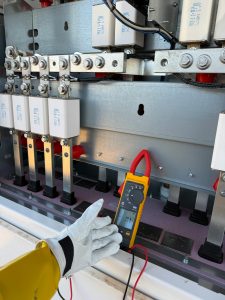
Once the pattern is clear, the electrician moves into testing. That may include checking the breaker condition, measuring load on the circuit, inspecting receptacles and switches for heat damage, tightening panel terminations where appropriate, isolating suspect devices, and testing for continuity or insulation faults when the branch circuit is de-energized. In many service calls, the fix is found in the first hour. In tougher cases, the process becomes one of careful elimination.
Common causes behind persistent breaker trips
Most repeat tripping complaints fall into a handful of categories, though the details can vary a lot from house to house.
A simple overload is still the most common issue. Kitchens, laundry areas, bathrooms, garages, and home offices take a beating because people keep adding plug-in equipment without adding circuits. If the breaker only trips when certain devices run together, this is the first place to look.
Failing appliances are another big one. I have seen refrigerators with compressor issues trip breakers only during startup, treadmills trip circuits once their motors warmed up, and older microwaves create nuisance trips as internal components aged. Homeowners often blame the house wiring first because the appliance still "kind of works." That partial function can be misleading.
Loose connections are underrated troublemakers. A receptacle with a weak stab-in connection or a wire termination that was never properly torqued can generate heat and arcing under normal use. These faults are especially sneaky because they may not fail all the time. They act up as the conductor expands and contracts with temperature changes.
Ground faults show up often in bathrooms, kitchens, basements, crawlspaces, garages, and outdoor circuits. Water, condensation, damaged cords, or worn insulation can all give current a path it should never take. If a GFCI breaker or receptacle keeps tripping, the problem may be at the connected device or anywhere downstream.
Arc fault issues deserve respect too. AFCI breakers have a reputation among homeowners for nuisance tripping, but many times they are identifying a real condition, especially with damaged lamp cords, pinched cable, loose device screws, or aging outlets. Sometimes compatibility issues with certain electronics play a role, but that should be determined through testing, not assumption.
Then there is the breaker itself. Breakers do wear out. They are mechanical devices living in a hot, electrically active environment. If a breaker has tripped many times, feels loose on the bus, shows signs of heat, or no longer holds normal loads that it once carried comfortably, replacement may be justified. Still, a good electrician replaces it only after considering why it has been stressed in the first place.
Warning signs that push this beyond a minor inconvenience
Some breaker problems belong on the urgent side of the schedule. If you smell burning near the panel, hear crackling at an outlet, see discoloration on receptacle faces, or feel unusual warmth at switches or cords, do not keep resetting and hoping for the best. The same goes for breakers that trip immediately and repeatedly, lights that flicker with appliance use, or any sign that water may have reached electrical equipment.
One service call that sticks with me involved a garage freezer circuit that kept tripping "for no reason." The owner had reset it three or four times over two weeks. The issue turned out to be a partially melted receptacle behind stored boxes, caused by a loose connection that had been heating under load. The breaker was preventing a much worse outcome. The food loss was annoying. The avoided fire mattered more.
When resetting the breaker is reasonable, and when it is not
A single reset after an obvious overload is usually fine. If you know the vacuum, heater, and iron were all running together, shut off the load, reset the breaker, and avoid repeating the same combination. That is a practical response.
What is not wise is repeated resetting when the cause is unknown. Each trip is information. If the breaker trips again under light load, trips with a particular appliance, or refuses to stay on, further resets stop being troubleshooting and start becoming risk acceptance.
A useful rule is simple. One obvious overload event can be a lesson. A second unexplained trip deserves investigation. A third should move quickly onto a Residential Electrician's schedule.
The service panel is only part of the story
People often assume breaker problems begin and end inside the panel. Sometimes they do. More often, the panel is where the symptom appears while the cause is out in the branch circuit.
That matters because a panel swap is not a universal cure. I have seen homeowners spend significant money replacing an old panel, only to discover the bedroom trip problem was actually caused by a damaged cord under a bed frame or a faulty bathroom exhaust fan sharing a multi-room circuit. Panel work can be necessary and worthwhile, especially where equipment is obsolete or unsafe, but it should follow a real diagnosis.
On the other side of the equation, I have also seen branch circuit issues blamed on appliances for months when the true source was a weak breaker or a bus connection problem in the panel. Good diagnosis protects your budget as much as it protects the house.
Practical solutions that actually solve the problem
The right repair depends on the cause, but most effective solutions fall into a few categories:
- Redistributing or reducing electrical load on the circuit.
- Replacing a defective appliance or cord.
- Repairing damaged wiring, outlets, switches, or splices.
- Installing dedicated circuits for high demand equipment.
- Replacing a breaker after confirming the rest of the circuit is sound.
Load management sounds simple, but it can make a major difference. If a home office shares a bedroom lighting circuit and now supports monitors, printers, chargers, and a portable AC unit, the circuit design no longer matches real use. Adding a dedicated circuit may be the cleanest long-term fix. The same logic applies in kitchens, laundry rooms, garages, and media rooms.
Repairs to devices and splices often resolve the more puzzling cases. A receptacle that looks fine from the outside can be scorched or loose behind the cover plate. A junction box in an attic can hide a poor splice for years before heat and vibration start causing trouble. These are not glamorous repairs, but they are among the most important.
Dedicated circuits are especially valuable for equipment with motors or heating elements. Refrigerators, freezers, microwaves, sump pumps, laundry equipment, and workshop tools all benefit when they are not competing with general-purpose loads. In many homes, these upgrades do more than stop trips. They improve reliability and reduce voltage drop that can shorten appliance life.
Why AFCI and GFCI breakers complicate the conversation
Modern code-required protection has made homes safer, but it has also changed how breaker trips show up. Standard thermal-magnetic breakers mainly respond to overcurrent and short circuits. AFCI and GFCI devices respond to a broader set of hazards. That means they can trip in situations where an older breaker would have stayed on, even though the underlying condition still deserved attention.
This is where experience matters. A Residential Electrician understands the difference between a genuine fault, a device compatibility issue, and a wiring layout problem that may be interacting poorly with sensitive protection. For example, older appliances with worn motors can create leakage that bothers GFCI protection. Shared neutrals on improperly handled circuits can cause repeated trips. Certain damaged cords produce arc signatures that only an AFCI will catch.
The answer is rarely to remove or bypass the protection. The smarter path is finding out why it is reacting.
What homeowners can safely observe before calling
You do not need to pull outlets apart or remove the panel cover to gather useful information. In fact, you should not. But there are a few observations that help make the service call more productive:
- Note which breaker trips and what rooms or devices lose power.
- Pay attention to what was running just before the trip.
- Check whether the trip happens instantly, after a few minutes, or only at certain times.
- Unplug portable devices on that circuit and see whether the pattern changes.
- Watch for heat, odors, buzzing, or moisture near outlets and equipment.
This kind of information saves time and sharpens the diagnosis. If you can tell the electrician, "It only trips when the treadmill starts," or "It happens during heavy rain," that is worth more than a vague report that the power just cuts out sometimes.
The cost side, and why cheap fixes often cost more later
Homeowners understandably want the least expensive answer. Sometimes the least expensive answer is also the right one, like replacing a bad receptacle or moving appliances off an overloaded branch. But when the problem is deeper, low-cost shortcuts have a way of multiplying the final bill.
One example is the repeated breaker replacement cycle. If a breaker trips because a compressor is failing, replacing the breaker may buy a few days or weeks before the new one trips too. Now you have paid for a part, labor, and still have the original appliance problem. The same pattern shows up with hidden wiring damage, especially after DIY work, rodent activity, or minor water intrusion. The fault stays there until someone follows it to the source.
Good electrical work is not about selling the largest repair. It is about matching the repair to the evidence. Some calls end with a modest fix and a short invoice. Others reveal that the home has simply outgrown parts of its original electrical design. In those cases, adding circuits or upgrading portions of the system is not overselling. It is catching the house up to how people live in it now.
Cases where circuit upgrades make more sense than repeated troubleshooting
There comes a point where the issue is not a defect at all, but an old circuit plan under modern pressure. This is especially common in kitchens, finished basements, garages converted to hobby spaces, and rooms that became home offices.
If a circuit is healthy yet constantly pushed near its limit, repeated tripping is almost guaranteed. You can manage around it for a while, but that usually means daily inconvenience, extension cord misuse, and constant negotiation over what can run at the same time. Adding a new branch circuit, separating loads, or creating dedicated appliance circuits is often the better investment.
I have had homeowners resist that recommendation at first because the system "used to be fine." That is usually true. The house changed. The electrical design did not.
Choosing the right professional for breaker problems
Not every tripping breaker requires major work, but it does require someone who approaches the issue logically. You want an electrician who asks questions, explains probable causes in plain language, and tests before replacing parts. A careful Residential Electrician should be willing to tell you when the problem is simple, when it is uncertain, and when a broader correction is needed for safety or code compliance.
Breaker trips are one of those household problems that tempt people into trial-and-error fixes. The danger is that the electrical system may appear to behave better for a short time while the real issue remains hidden. A breaker that keeps interrupting power is doing its job. Your job is to treat that interruption as useful information and bring in the right expertise when the pattern stops making sense.
When the diagnosis is done well, the solution is usually straightforward. It might be a bad appliance, an overloaded branch, a wet outdoor box, a failing breaker, or a circuit layout that no longer fits the home. The trick is identifying which of those you are actually dealing with before a nuisance becomes damage, spoiled food, or a serious fire risk.
Paxos Electric Company, LLC
255 NJ-15, Wharton, NJ 07885, United States
+1 973-598-8543
FAQ About Residential Electrician
What does a residential electrician do?
A residential electrician installs, inspects, maintains, and repairs electrical systems in homes. Common services include troubleshooting circuits, replacing panels, adding outlets and lighting, and completing electrical work for renovations.
When should I call an electrician for my home?
Call a licensed electrician if you notice repeated breaker trips, flickering lights, buzzing, burning odors, warm outlets, sparks, or unexplained power loss. Urgent warning signs should be addressed promptly.
Can a residential electrician upgrade an electrical panel?
Yes. A qualified electrician can evaluate the existing service, determine whether an upgrade is appropriate, obtain required permits, and install a panel sized for the home and planned electrical loads.
Do I need an electrician to install an EV charger?
A home EV charger often needs a dedicated circuit and a review of panel capacity. A licensed electrician can confirm the manufacturer requirements and complete the installation according to local electrical codes.